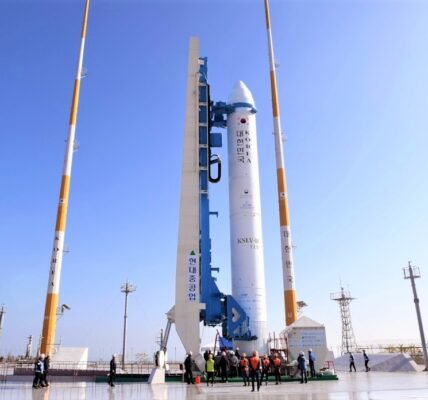

Nuri Rocket missions will see South Korea launching 12 additional missions by 2032. This expansion highlights the nation’s commitment to advancing its space capabilities.
Overview of Nuri Rocket missions
The Nuri Rocket missions have marked a significant milestone in South Korea’s space exploration efforts. Since its inaugural flight, the Nuri Rocket has demonstrated remarkable reliability and effectiveness, paving the way for future advancements in space technology.
As part of a comprehensive plan, South Korea aims to conduct 12 additional Nuri Rocket missions by 2032. These missions are expected to enhance the country’s capabilities in satellite deployment and scientific research, contributing to both national security and technological innovation.
One of the noteworthy upcoming missions is set to carry South Korea’s first military reconnaissance satellite payload in 2031. This development underscores the strategic importance of the Nuri Rocket missions in bolstering national defense and intelligence capabilities.
The success of the Nuri Rocket has not only positioned South Korea as a competitive player in the global aerospace industry but also inspires future collaborations and projects. With ongoing improvements and adaptations, the Nuri Rocket missions are set to propel South Korea into a new era of space exploration and utilization.
Upcoming military reconnaissance satellite
As part of its ambitious plans for the future, South Korea is set to launch its first military reconnaissance satellite aboard the Nuri Rocket in 2031. This mission represents a significant step in enhancing national security and intelligence capabilities. The Nuri Rocket missions, celebrated for their proven success, will play a crucial role in deploying advanced satellites that can monitor regional developments and bolster defense strategies.
The military reconnaissance satellite is expected to provide high-resolution imagery and real-time data, which are essential for assessing threats and making informed decisions. The South Korean government aims to achieve a full operational capability by the time of the launch, ensuring that the satellite can effectively support various military operations.
Key features of the upcoming satellite include:
- High-resolution imaging: Enhanced capabilities to capture detailed images of land and sea.
- Real-time data transmission: Immediate access to critical information for decision-making.
- Increased surveillance range: Ability to monitor vast areas and detect potential threats.
With the Nuri Rocket missions paving the way, South Korea is poised to significantly advance its satellite technology and military readiness in the coming years.
Nuri Rocket missions timeline
The timeline for the Nuri Rocket missions showcases a series of planned launches designed to enhance South Korea’s capabilities in space exploration and satellite deployment. Following its successful inaugural flight in 2021, the Nuri Rocket has established a foundation for future missions that will significantly contribute to national security and scientific research.
Looking ahead, the Nuri Rocket is scheduled for a total of 12 more missions by 2032. Among these, a key milestone will be the launch of the country’s first military reconnaissance satellite, set for 2031. This mission marks a pivotal moment in leveraging the Nuri Rocket’s capabilities for defense purposes.
- 2021: Successful inaugural flight of the Nuri Rocket.
- 2023: Planned launch of a scientific satellite.
- 2025: Second mission focusing on commercial satellite deployment.
- 2031: Deployment of the first military reconnaissance satellite.
- 2032: Completion of the 12-mission plan.
With each launch, the Nuri Rocket missions are paving the way for advancements in technology and positioning South Korea as a key player in the global space arena.
South Korea’s space ambitions for 2032
As South Korea sets its sights on expanding its presence in space, the Nuri Rocket missions play a pivotal role in achieving its ambitious goals by 2032. The Korean government has outlined a strategic roadmap that includes a series of upcoming launches designed to bolster the nation’s capabilities in satellite deployment and space exploration.
Among the key objectives is the launch of 12 additional missions, which will not only enhance the country’s technological prowess but also support various scientific and commercial endeavors. These missions are expected to include innovative payloads that address both national security and commercial needs.
One of the most anticipated milestones is the deployment of South Korea’s first military reconnaissance satellite in 2031. This satellite will provide crucial intelligence capabilities, further establishing South Korea’s defense framework in an increasingly complex regional security environment.
In addition to military applications, the Nuri Rocket missions will support advancements in Earth observation and scientific research, ultimately positioning South Korea as a significant player in the global space community.
With these ambitious plans, South Korea is on track to solidify its status as a leader in space technology by the end of the decade.
Sources
You might also like