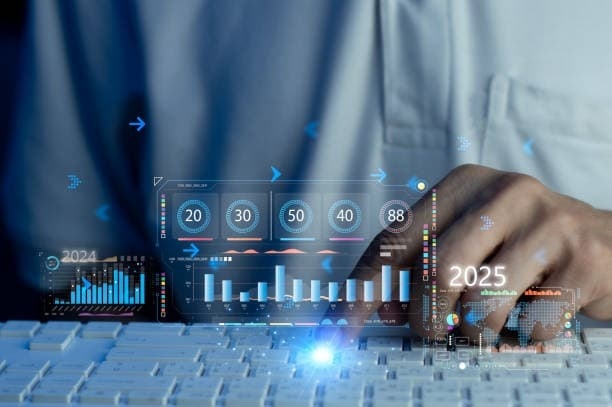

Imagine a bustling city at night, its streets illuminated with countless lights. Each light represents a person, while the glowing lines between them represent their connections—friends, colleagues, or shared interests. On their own, the lights are beautiful but incomplete. It’s only when we trace the lines that we begin to see patterns: communities forming, information spreading, and influences shaping the flow of ideas.
Graph Neural Networks (GNNs) are the tools that let us see these patterns with clarity. By analysing nodes (people) and edges (connections), GNNs unlock the hidden structure of social networks and help answer pressing questions: Who are the influencers? How do ideas spread? Where do communities converge?
Why GNNs for Social Networks?
Traditional machine learning often treats data like a spreadsheet—rows of users, columns of attributes. But human connections are rarely that neat. Social interactions are dynamic, interwoven, and highly contextual. GNNs excel because they learn directly from these relationships, capturing not only individual attributes but also the influence of surrounding nodes.
For example, in detecting misinformation on platforms, GNNs can flag not just the suspicious post but the surrounding web of accounts amplifying it. This relational perspective is why GNNs are becoming central to modern social network analysis.
Foundations for working with such models are often introduced in a data science course, where learners explore how graph structures differ from traditional datasets and why these differences matter for real-world problems.
Building Blocks of GNNs
At the heart of a GNN lies the concept of message passing. Each node aggregates information from its neighbours, updates its representation, and then passes the message onward. Over multiple layers, the network develops a holistic view of the graph.
The steps usually involve:
- Feature aggregation – Collecting attributes from connected nodes.
- Transformation – Applying learned weights to encode relationships.
- Propagation – Passing the updated representation across the graph.
This iterative learning process allows GNNs to capture both micro-level interactions and macro-level patterns, from identifying influencers to detecting clusters of tightly connected users.
Practical Applications of GNNs
The power of GNNs extends across industries:
- Community Detection – Mapping how groups form and evolve in social media.
- Recommendation Systems – Leveraging user connections to suggest relevant products or content.
- Fraud Detection – Spotting unusual transaction patterns in financial networks.
- Misinformation Tracking – Identifying clusters where false information spreads rapidly.
Hands-on programmes like a data science course in Mumbai often incorporate projects on these applications, helping learners bridge theory and practice. Students build GNN-based models that simulate social graphs, offering real-world insights into how connections shape outcomes.
Challenges in Using GNNs
Despite their potential, GNNs face hurdles. Large social networks can contain millions of nodes and billions of edges, making computations resource-intensive. Over-smoothing—where nodes in the same neighbourhood become indistinguishable—can also limit effectiveness.
Researchers are actively developing solutions, such as sampling strategies to handle scale and advanced architectures to preserve diversity across nodes. Practitioners must balance accuracy with computational efficiency, ensuring models remain practical for deployment.
The Future of Social Network Analysis
As social networks grow more complex, the ability to analyse them effectively becomes critical. GNNs promise to move beyond simple link predictions toward richer insights—like forecasting how communities will evolve or identifying early signals of collective behaviour.
Structured pathways, such as a data science course, prepare professionals to engage with these innovations. By blending theoretical foundations with practical experiments, learners gain the skills to adapt as GNN research evolves and new applications emerge.
Conclusion
Graph Neural Networks transform social networks from abstract webs into understandable stories of influence, collaboration, and behaviour. By learning from both individuals and their connections, GNNs provide a richer lens for interpreting the digital societies we inhabit.
For aspiring professionals, opportunities to work with GNNs are expanding rapidly. Programmes like a data science course in Mumbai give learners the chance to experiment with these models firsthand, equipping them to contribute to the next generation of social network analysis.
Just as city lights only reveal their true beauty when connected, social networks reveal their hidden patterns through the lens of GNNs.
Business name: ExcelR- Data Science, Data Analytics, Business Analytics Course Training Mumbai
Address: 304, 3rd Floor, Pratibha Building. Three Petrol pump, Lal Bahadur Shastri Rd, opposite Manas Tower, Pakhdi, Thane West, Thane, Maharashtra 400602
Phone: 09108238354
Email: enquiry@excelr.com